Sunday Special- "Democide of Humanity!"
Sunday Special- "Democide of Humanity!"
Ingratitude of a Nation-"The return for fidelity -betrayal".

His name is Dr. Nakamura Tetsu -a Japanese humanitarian doctor,Engineer,Farmer & Hero in Afghanistan was born in the Japanese city of Fukuoka in 1946.After qualifying as a doctor he moved to Pakistan in 1984 to treat patients with leprosy. Along with Pakistan, he also worked in Afghanistan. He ran an organization called “Peshawar-kai.” a Humanitarian who devoted his life to Afghanistan wanted to 'shine light into dark corners'. Two years later, he headed to Afghanistan, where he opened his first clinic in a remote village in Nangarhar and established a non-governmental organization, Peace Japan Medical Services (PMS).At its peak, PMS operated 10 clinics providing help for leprosy patients and refugees amongst others.
In the year 2000, Afghanistan faced a devastating drought and famine. Experts warned that nearly 4 million people would be affected, and around 1 million could die solely from hunger and thirst. Due to lack of clean water, people were forced to drink contaminated water, which led to rapid outbreaks of dysentery and diarrhea. Thousands of children died because of diarrhea. At that time, Dr. Nakamura thought: “We can treat them later, but first they need to survive. Only if they stay alive can we heal them. And to stay alive, water is the first necessity. Unless there is a permanent solution, nothing will change.” He said,
“Medicines cannot cure hunger and thirst. I want to go beyond the narrow field of medicine and do something that ensures people get food and water.” This thought laid the foundation of a major canal project in eastern Afghanistan a 25 km canal to bring water from the Kunar River to drought-stricken areas.
“Medicines cannot cure hunger and thirst. I want to go beyond the narrow field of medicine and do something that ensures people get food and water.” This thought laid the foundation of a major canal project in eastern Afghanistan a 25 km canal to bring water from the Kunar River to drought-stricken areas.
His motto was:One Irrigation canal will do much better than 100 Doctors."

Tetsu Nakamura in the Gamberi Desert, Afghanistan in 2008
Dr. Nakamura had no civil engineer. There wasn’t even a capable engineer in all of Afghanistan who could execute this project. He himself was not from an engineering background yet he stepped into the field.
He repeatedly travelled to Japan, studied engineering on his own, met irrigation experts, learned ancient Japanese irrigation techniques, and brought that knowledge back to Afghanistan to implement.
He repeatedly travelled to Japan, studied engineering on his own, met irrigation experts, learned ancient Japanese irrigation techniques, and brought that knowledge back to Afghanistan to implement.
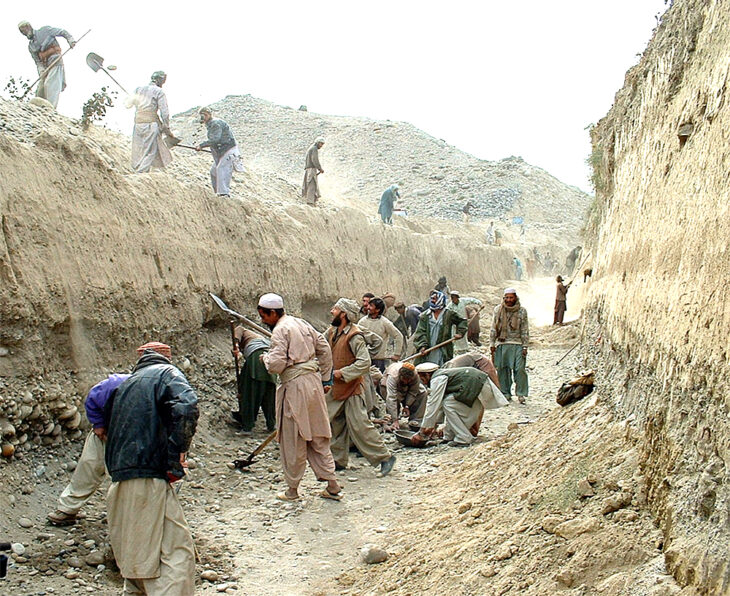
Digging canal, December, 2000. A scene from the Marwarid Irrigation Canal Construction Project.
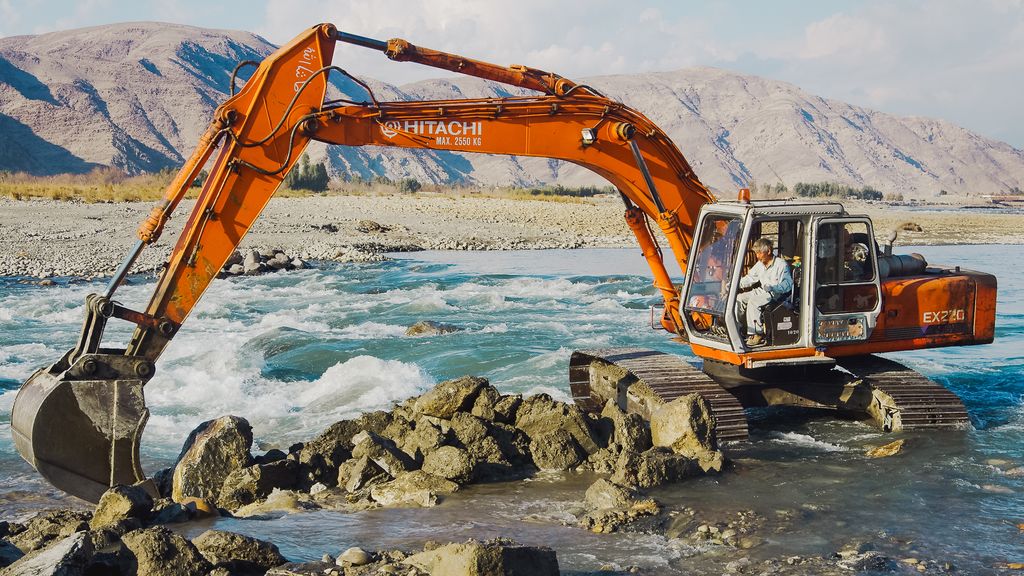
Dr. Nakamura operates an excavator in Afghanistan.
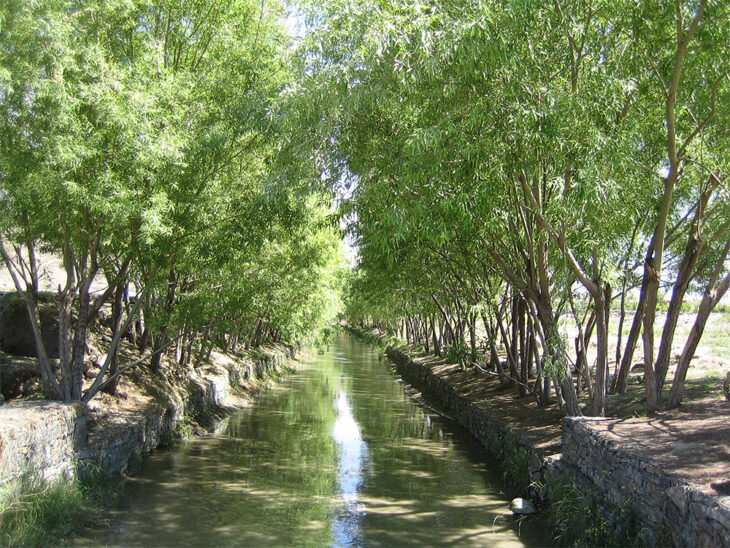
A scene of the same place on April, 2014 where people were digging
Because of this canal, 16,000 hectares of barren land became fertile again. It provided food security to
more than 600,000 people. He dedicated 20 years of his life to Afghanistan’s welfare saving people from hunger and thirst, turning deserts into green fields, bringing water where there was none.
People lovingly called him “Kaka Murad.”
People lovingly called him “Kaka Murad.”
But… what did he receive in return? The same Afghan bullets. The giver of life rewarded with death.'On December,04. 2019, while he was on his way to inspect one of the canal sites, terrorists of Tehrik-e-Taliban Pakistan ambushed him and riddled him with bullets. His driver and bodyguard were also killed.Tetsu Nakamura: Japanese doctor among six dead in Afghan gun attack. Five Afghans were also killed in the attack, which happened in the city of Jalalabad Nakamura dedicated all his life to change the lives of Afghans, working on water management, dams and improving traditional agriculture.
Dr Nakamura headed a Japanese charity and served in rural areas of Afghanistan who devoted his career to improving the lives of Afghans has died, after being injured in an attack in eastern Afghanistan.Gunmen shot Tetsu Nakamura, 73, while he was travelling in a car to monitor a project.Dr Nakamura headed a Japanese charity focused on improving irrigation in the country.He was awarded honorary citizenship from the Afghan government for his humanitarian work.Japanese Prime Minister Shinzo Abe said he was "shocked" by the death of Dr Nakamura while the US embassy in Kabul condemned the shooting, saying "aid workers are not targets".The United Nations Assistance Mission in Afghanistan (UNAMA) expressed its "revulsion" over the killing.
did the attack unfold?
He was shot on the right side of his chest and was in the process of being transferred to a hospital near the capital Kabul when he died at Jalalabad airport. Photos from the scene showed a white pickup truck with at least three bullet holes in its windscreen.

Bullet holes are seen in the window of the vehicle
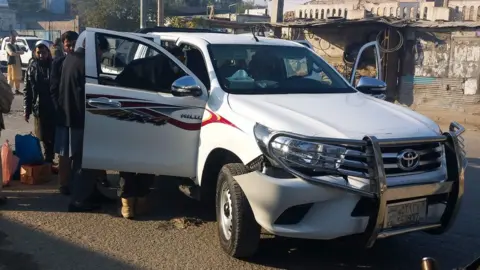
The victims were in a white pickup truck
ISLAMABAD - A mural in central Kabul dedicated to a Japanese doctor who devoted his life to drilling wells and other humanitarian work in Afghanistan before being gunned down in 2019 was recently erased. The portrait of Tetsu Nakamura is believed to have been painted over in white along with other murals at the direction of the Taliban, which seized control of the country in mid-August, as they were in a traffic circle named after a known anti-Taliban resistance figure.

Combined photo shows a mural of Tetsu Nakamura pictured in December 2019 (above) and the same
concrete wall seen on Sept. 5, 2021, in central Kabul. (Kyodo)
“We choose not to go to the places where everyone is willing to go, but rather the places where help is desperately needed and no one else is willing to go.”
-Dr. Tetsu Nakamura
Searched,Compiled and Illustrated by Tejinder Kamboj
( 1940-20??)


Comments
Post a Comment