Sunday Special-OMG-"Baruch Spinoza's God"
Sunday Special-OMG-"Baruch Spinoza's God"

Baruch Spinoza (Dutch, 1632-1677)
Spinoza was born in Amsterdam to a Marrano family that fled Portugal for the more tolerant Dutch Republic. He received a traditional Jewish education, learning Hebrew and studying sacred texts within the Portuguese Jewish community, where his father was a prominent merchant. As a young man, Spinoza challenged rabbinic authority and questioned Jewish doctrines, leading to his permanent expulsion from his Jewish community in 1656. Following that expulsion, he distanced himself from all religious affiliations and devoted himself to philosophical inquiry and lens grinding. Spinoza attracted a dedicated circle of followers who gathered to discuss his writings and joined him in the intellectual pursuit of truth.
Spinoza published little, to avoid persecution and bans on his books. In his Tractatus Theologico-Politicus, described by Steven Nadler as "one of the most important books of Western thought", Spinoza questioned the divine origin of the Hebrew Bible and the nature of God while arguing that ecclesiastic authority should have no role in a secular, democratic state. Ethics argues for a pantheistic view of God and explores the place of human freedom in a world devoid of theological, cosmological, and political moorings.
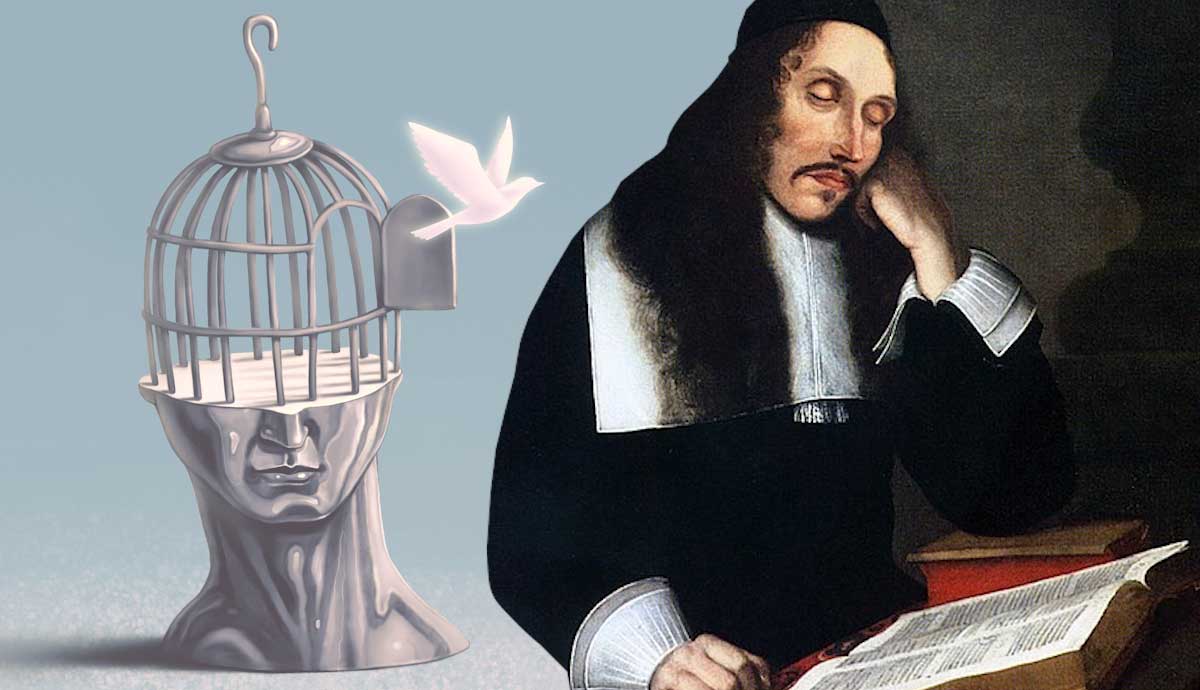
Every man should think what he likes and say what he thinks
Rejecting messianic and the emphasis on the afterlife, Spinoza emphasized appreciating and valuing life for oneself and others. By advocating for individual liberty in its moral, psychological, and metaphysical dimensions, Spinoza helped establish the genre of political writing called secular theology.
Considered one of the most important philosophers of the early modern period, Spinoza’s writings covered a vast variety of subjects, ranging from ethics to metaphysics to Biblical criticism. His two most important works, Ethics and Theologica-Political Treatise, remain highly influential in today’s study of philosophy. During his lifetime, he took extremely naturalistic views on God, the world, and humans and laid foundations for democratic political thought and critique of sectarian religion.
Spinoza’s career as a philosopher was not without controversy. For the time period, his radical views on divinity and the Hebrew Bible such as denying humans had an immortal soul led to him being labelled as a heretic and effectively exiled from the Amsterdam Jewish community into which he was born.
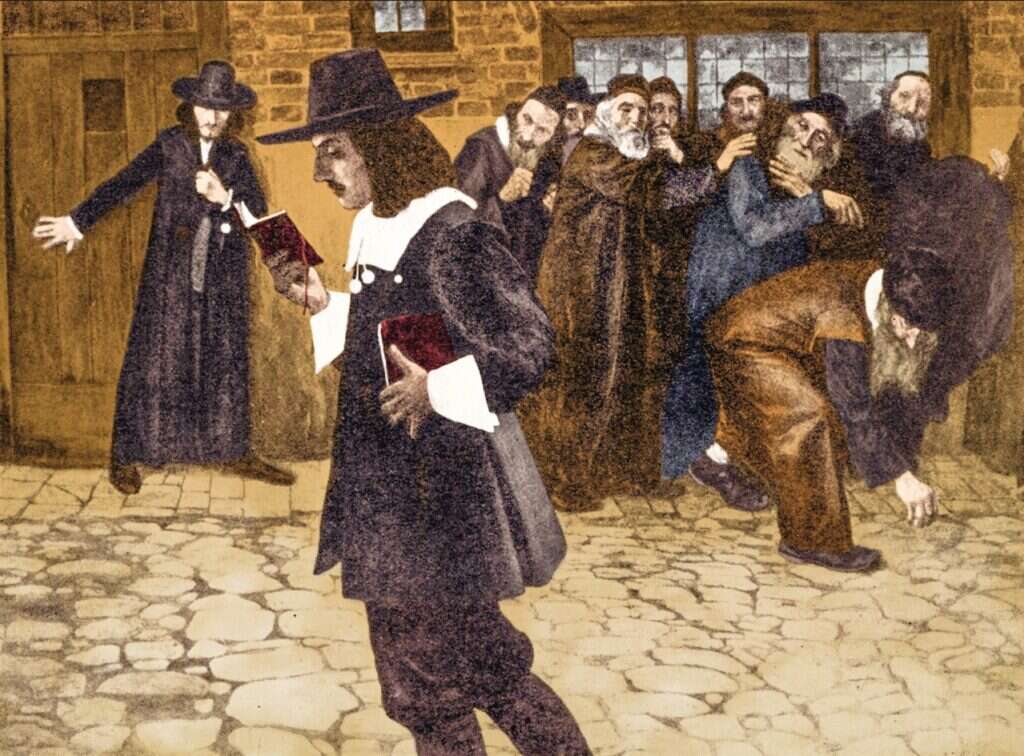
Following his death, his works were banned throughout the States of Holland and were added to the Index of Forbidden Books created by the Catholic Church. Spinoza’s ideas and works sparked renewed interest in the nineteenth and twentieth centuries, and he has been repeatedly honoured in modern Netherlands. Artist Sigmund Abel es inserts a little speculation and comedy into his image of Rembrandt and Spinoza, as apparently the two men were neighbours in Amsterdam, but there is no historical documentation that they ever met.

"God or Nature (Deus Sive Natura)
Spinoza's God, often summarized as "God or Nature (Deus Sive Natura)," is not a personal, anthropomorphic deity but rather the single, infinite, self-caused substance underlying the entire universe, encompassing all reality, laws, and existence He is immanent (within everything) rather than transcendent, meaning everything is a part of God, not separate from Him, operating through necessary natural laws, not personal will or judgment. This view is known as pantheism, identifying God with the totality of the cosmos.

Spinoza’s God: The Universe as One Big Gorgeous Mess


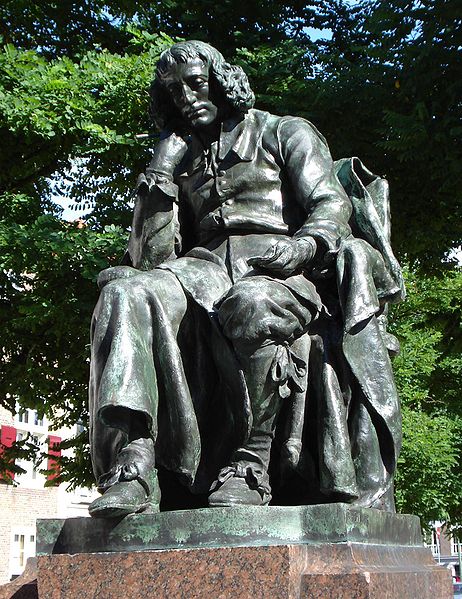
Sipnoza house Museum

Searched, compiled and Illustrated by Tejinder Kamboj
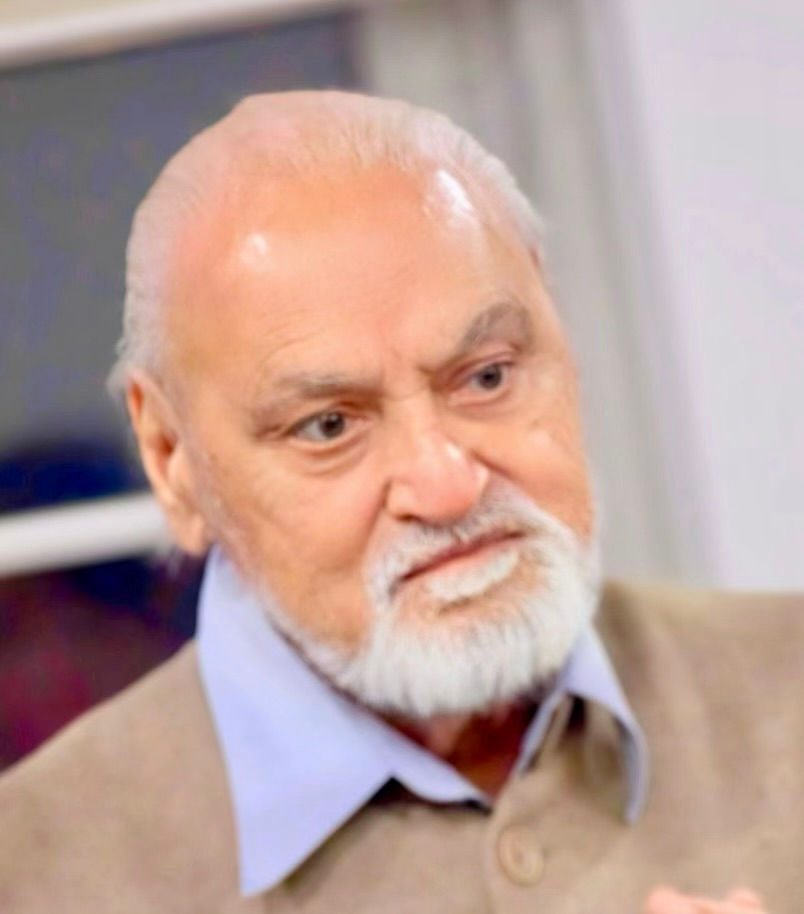
( 1940-20?? )


Comments
Post a Comment